
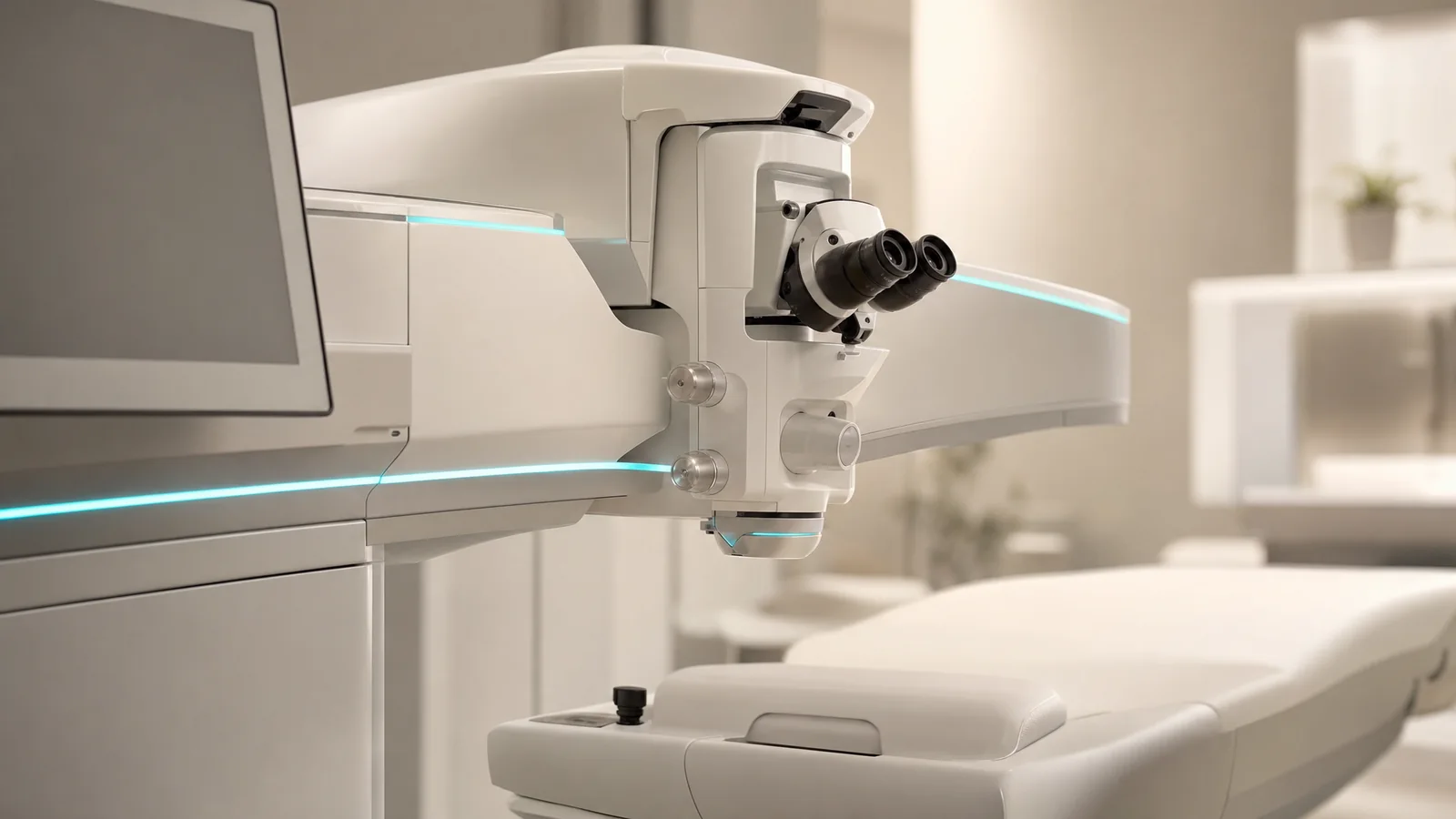
OCT (optical coherence tomography)
Produces highly detailed images of the retina, the macula and the optic nerve in a few seconds, without touching the eye. It can detect changes before you notice them.
Diagnostics & technology
Every recommendation is based on the assessment of our ophthalmologists and on precise diagnostic tests. These are the examinations you may need, and what each one is for.
 AI illustration · placeholder
Diagnostics
Produces highly detailed images of the retina, the macula and the optic nerve in a few seconds, without touching the eye. It can detect changes before you notice them.
Maps the shape and thickness of the cornea with great precision. It is essential before any surgery and makes it possible to detect keratoconus.
Measures the eye without contact and with great precision in order to calculate the power of the intraocular lens.
Detects loss of peripheral vision that can easily go unnoticed. It is essential for diagnosing and monitoring glaucoma.
Photographs the retina. Used to check the back of the eye (fundus).
This is the ophthalmologist's basic examination, together with a measurement of the eye pressure. We carry it out at every visit because it gives an overall picture of the health of your eye.
Analyses the quantity and quality of your tears and the condition of the eyelid glands. It is the basis for treating dry eye and for preparing the eye before surgery.
Surgical technology
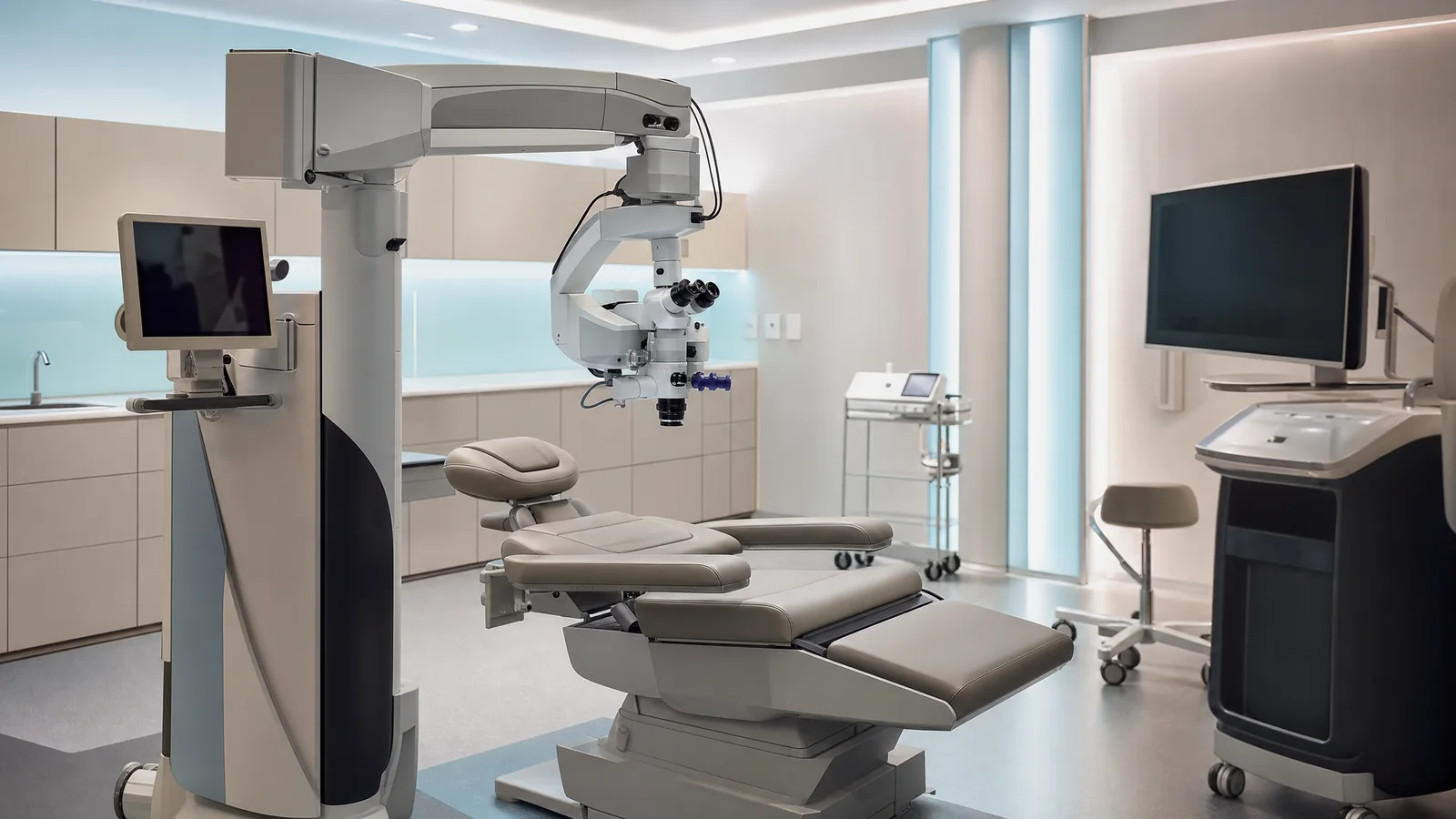
Creates the corneal flap or the lenticule and assists with certain steps of cataract surgery, without a blade.
Reshapes the cornea with pulses of micrometre precision, guided by the data from your preliminary examination.
Breaks up the clouded natural lens with ultrasound through a small incision that needs no stitches.
High-resolution view for the surgeon, optionally with intraoperative OCT and lens alignment.
Treats secondary cataract in a few minutes and, in glaucoma, lowers the intraocular pressure without incisions.
The final equipment will be decided in phase 2 together with the ophthalmologists. On the website we name procedures and benefits, not manufacturers.
 AI illustration · placeholder
 AI illustration · placeholder
Prevention
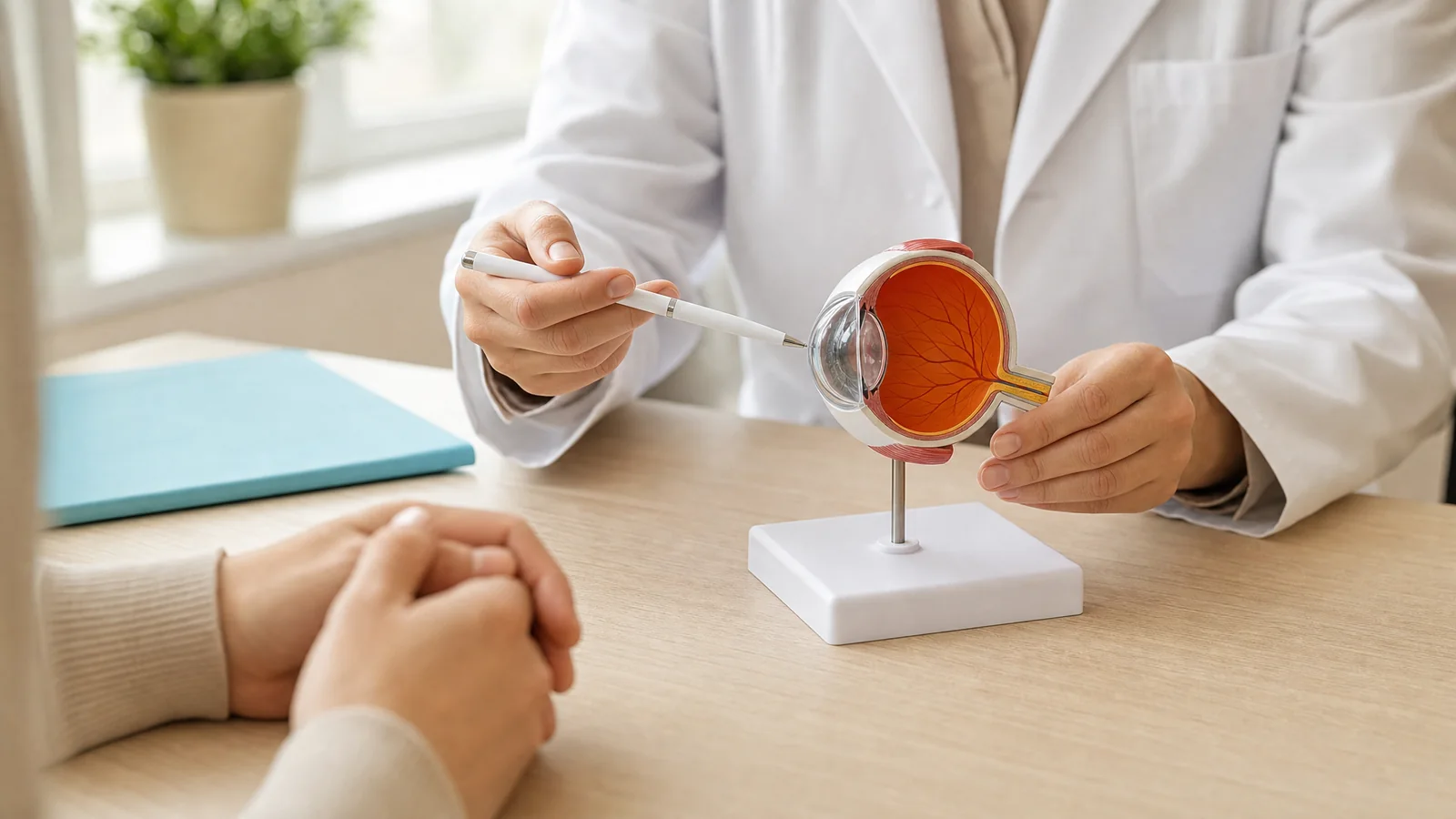
Many eye diseases cause no symptoms at first. That is why we recommend regular check-ups, especially if you have diabetes or high blood pressure, or a family history of glaucoma or other eye diseases.
The check-up takes about an hour. If we dilate your pupils, you will not be able to drive for a few hours, so we recommend that you come with someone.
Book an eye check-upBook an appointment at our clinic in Mallorca or send us your reports so that we can review them before your visit. No obligation.