
Cataracts
When the world loses its contrast.
Cataract surgery is the most common eye operation. The natural lens, which has become cloudy, is replaced with a clear intraocular lens. With premium lenses, it is also possible to reduce your dependence on glasses.
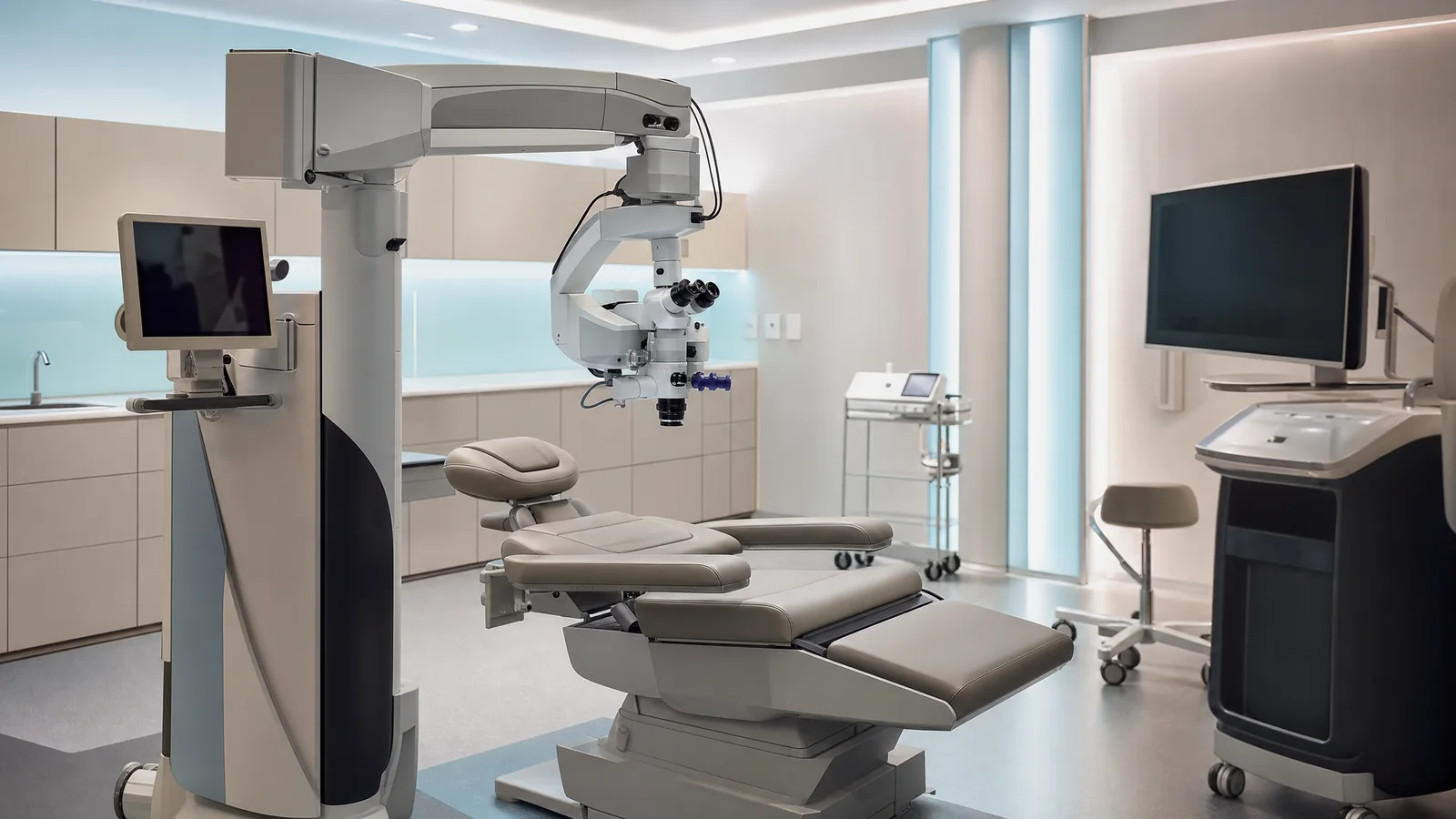 AI illustration · placeholder
Symptoms
How to recognise cataracts
Over the years, the lens gradually loses its transparency. This usually happens from the age of 60, although it sometimes appears earlier. The most common symptoms are seeing as if through a veil, being increasingly dazzled when driving at night, noticing that colours look duller and needing new glasses frequently. No medical treatment can stop cataracts, but surgery restores vision with very good results.
- Blurred vision, as if through a mist, even when wearing the right glasses
- Glare against the light or from car headlights
- Colours look yellowish or pale
- Frequent changes in prescription
At a glance
- Technique
- Phacoemulsification with an intraocular lens
- Duration
- About 15 to 20 minutes per eye
- Stay
- About one to two weeks, to operate on both eyes and carry out the first check-ups
- Aftercare
- Eye drops for several weeks and regular check-ups
Guide values only. We will give you the specific information for your case after the examination.
Premium lenses
The lens determines how you will see afterwards
Choosing the lens is a personalised process that we decide together with you. We take into account your lifestyle and your needs, as well as the condition of other structures of the eye such as the cornea, the retina and the optic nerve. Not every premium lens is suitable for every eye; at your consultation we will explain which one is best for you.
| Lens | What it offers |
|---|---|
| Monofocal lens | Sharp vision at one distance, usually far. You will still need glasses for reading. |
| EDOF lens | Extended range of focus from distance to intermediate (screen, dashboard). |
| Multifocal / trifocal lens | Several focal points for distance, intermediate and near vision. Maximum independence from glasses. |
In addition to the type of lens, astigmatism is corrected with toric lenses where needed.
 AI illustration · placeholder
Procedure
From diagnosis to clear vision
- Diagnostics and lens calculation
Optical biometry, corneal topography and OCT of the macula and optic nerve. These data are used to calculate the power of the intraocular lens and to assess the health of all structures of the eye.
- Consultation and choice of lens
Monofocal, EDOF or multifocal: we explain the benefits and limits of each option for your everyday life.
- Operation
As an outpatient, with anaesthetic eye drops and supported by an anaesthesia team.
- Second eye and check-ups
The second eye is operated on a few days or weeks later. Check-ups take place the following day and after about a week. After that, we will give you an aftercare plan so that you can continue your check-ups where you live.
Questions and answers
Frequently asked questions about cataracts
When is it time to have surgery?
When the cataract starts to affect your daily life: reading or driving becomes difficult, glare bothers you or colours look duller. There is no need to wait until the cataract is “ripe”.
What does the operation involve?
Through a small incision of about two millimetres, the cloudy lens is broken up with ultrasound and removed by suction. The intraocular lens is then inserted: it goes in folded and unfolds inside the eye. The procedure takes 15 to 20 minutes and is performed with anaesthetic eye drops. No hospital stay is needed.
Are both eyes operated on the same day?
There are usually a few days to a few weeks between one eye and the other. If you are coming from outside Mallorca, we organise your stay so that both eyes can be operated on and the check-ups completed in a single trip, provided your case allows it.
What is a secondary cataract?
Months or years after the operation, the membrane that holds the intraocular lens can lose its transparency. This does not mean that the cataract has come back. It is treated in a few minutes with a YAG laser, without a hospital stay, and can also be done by your usual ophthalmologist.
Can I travel by plane after the operation?
Yes, in general you can fly as soon as the check-up on the following day allows it and the doctor approves the journey. During the first few weeks, it is important that you use your drops exactly as we tell you, protect yourself from the sun and avoid getting water in your eye.
Clear vision can be planned.
Book an appointment in Mallorca or send us your ophthalmologist’s report for a preliminary assessment.